Overview
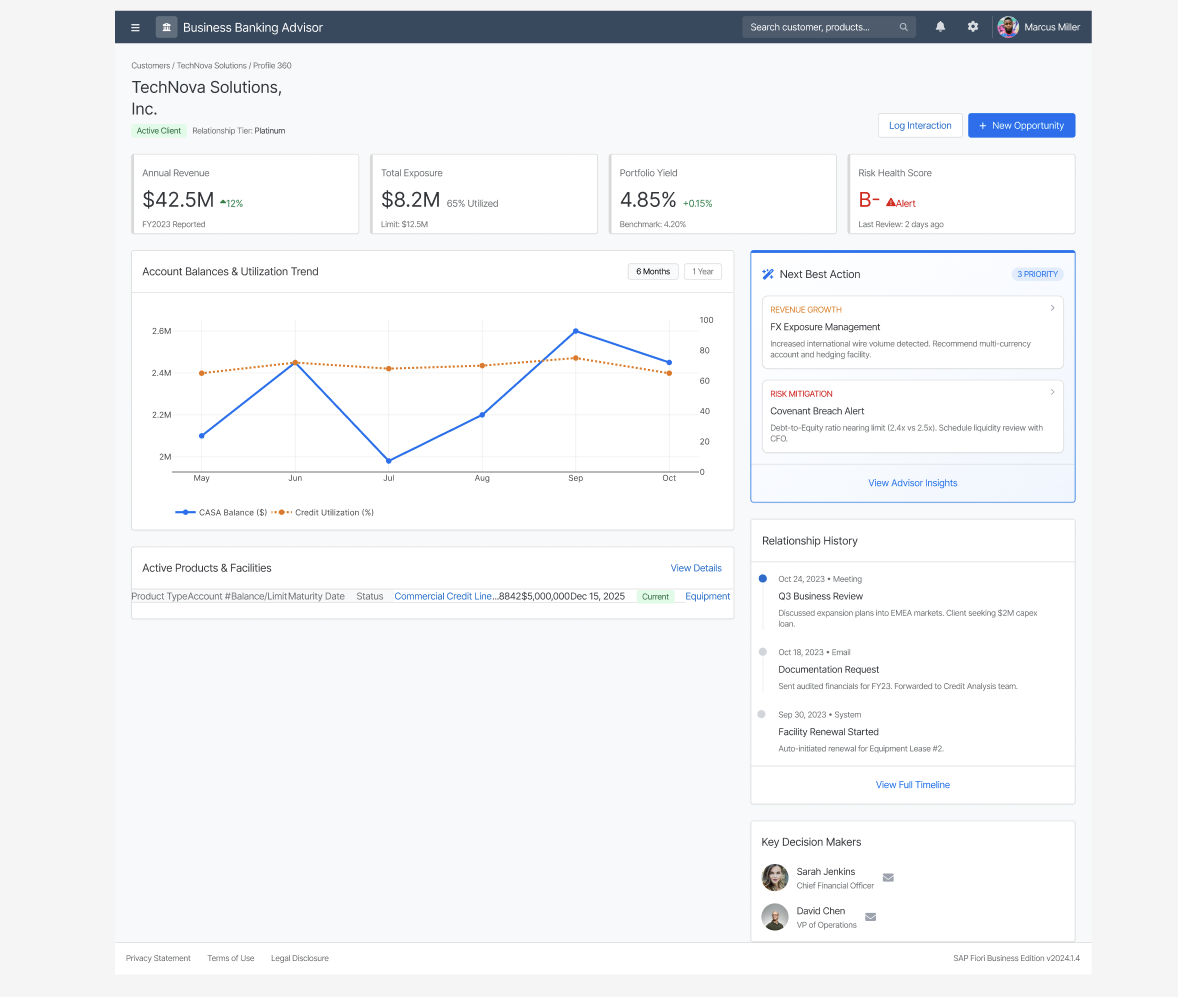
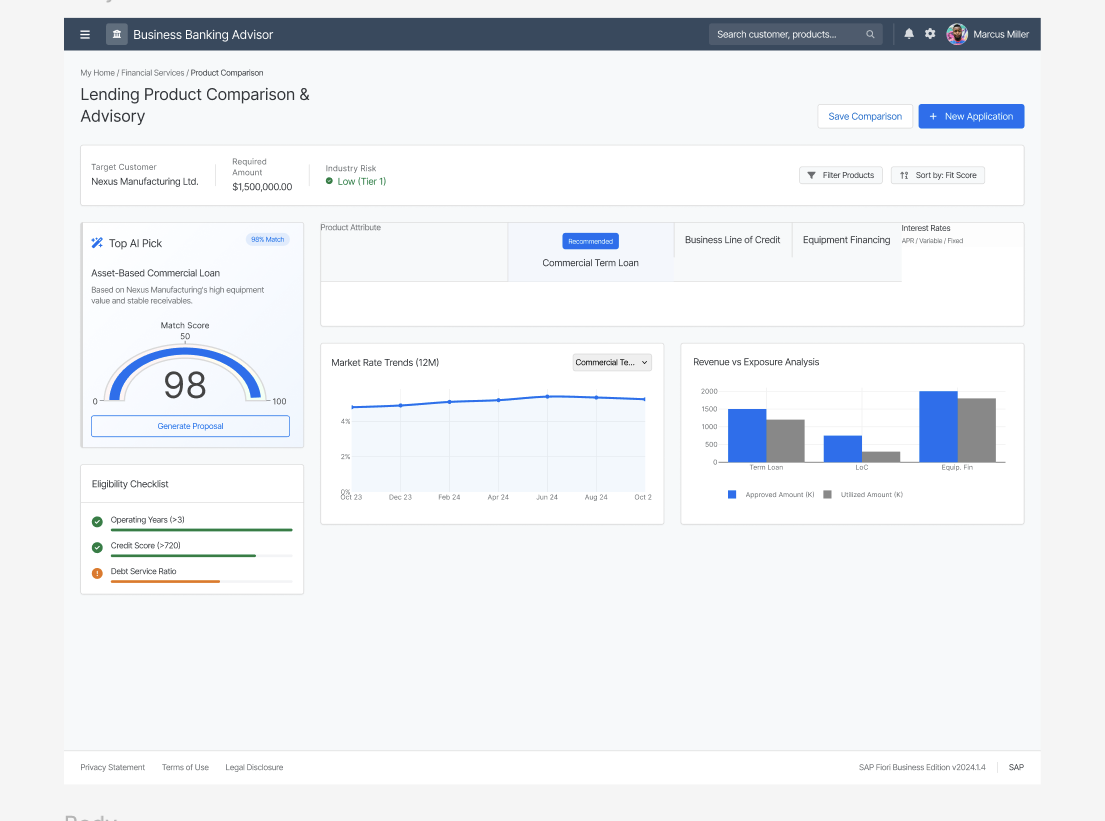
This enterprise UX case study focuses on improving advisor-facing business banking tools. These tools often support complex decisions involving customer needs, product eligibility, regulatory content, and internal workflows.
The design challenge is not just visual cleanup; it is about making complex information easier to interpret so advisors can make faster and more confident decisions.
Problem
Advisor workflows can become fragmented when policy content, product details, customer data, and next steps are spread across multiple screens.
- Advisors spend extra time searching for information.
- Important decision criteria may be missed.
- Content becomes inconsistent across tools.
- Complex regulatory language increases cognitive load.
- New users require more time to learn the workflow.
Goal
The goal was to create a clearer, more scalable advisor experience by improving information architecture, simplifying content, standardizing UX patterns, and supporting accessibility from the beginning.
Users & Context
The primary users are advisors working in a fast-paced business banking environment. They need to understand customer context, evaluate product options, follow required processes, and communicate clearly with clients.
Design Process
Workflow Mapping
I would begin by mapping the advisor journey from customer intake to recommendation and follow-up.
Content Audit
Next, I would identify duplicated, outdated, or unclear content across screens.
Information Architecture
I would group information by decision priority: what the advisor needs first, what supports the decision, and what can be shown only when needed.
Pattern Definition
I would define reusable UI and content patterns for forms, alerts, summaries, and status states.
Key Design Decisions
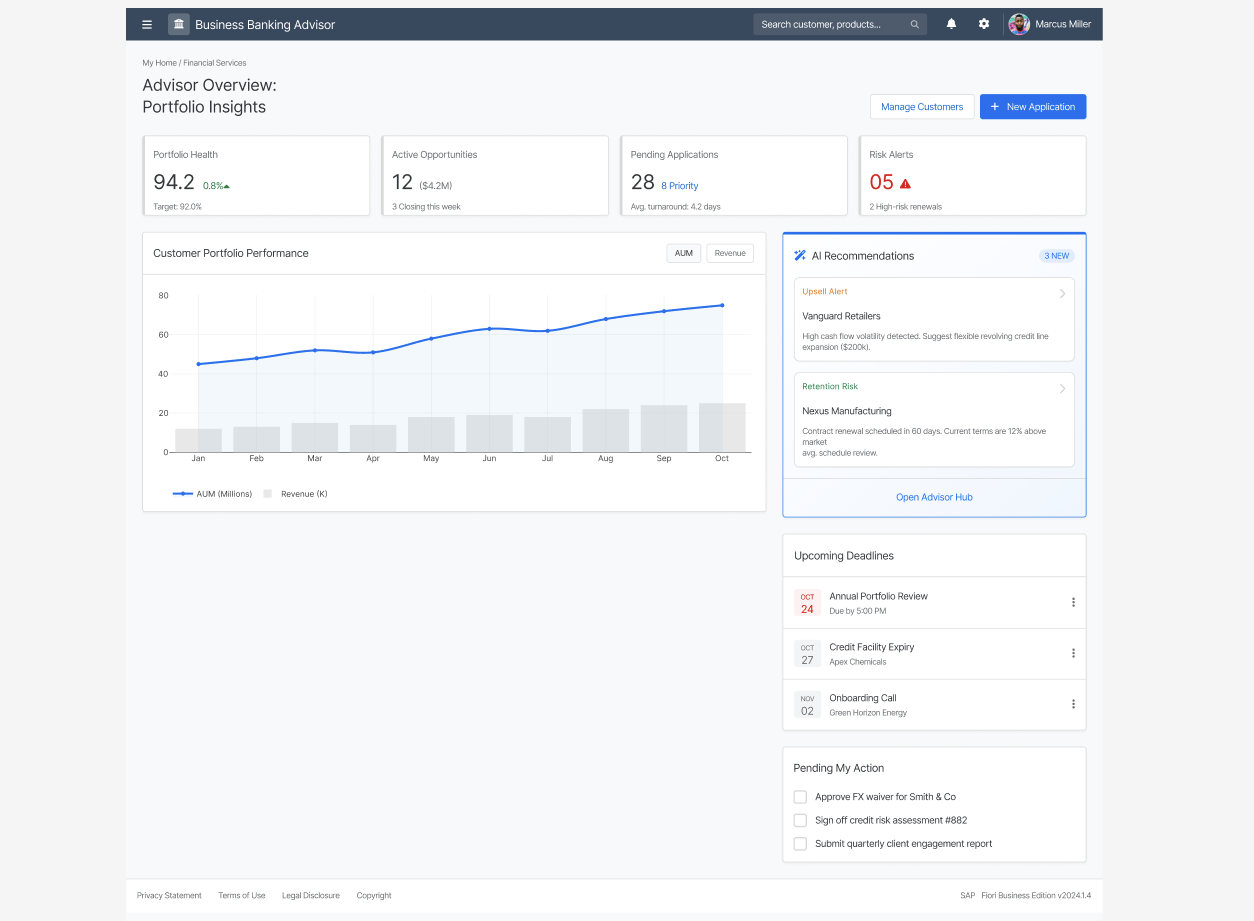
- AI-Powered Next Best Actions
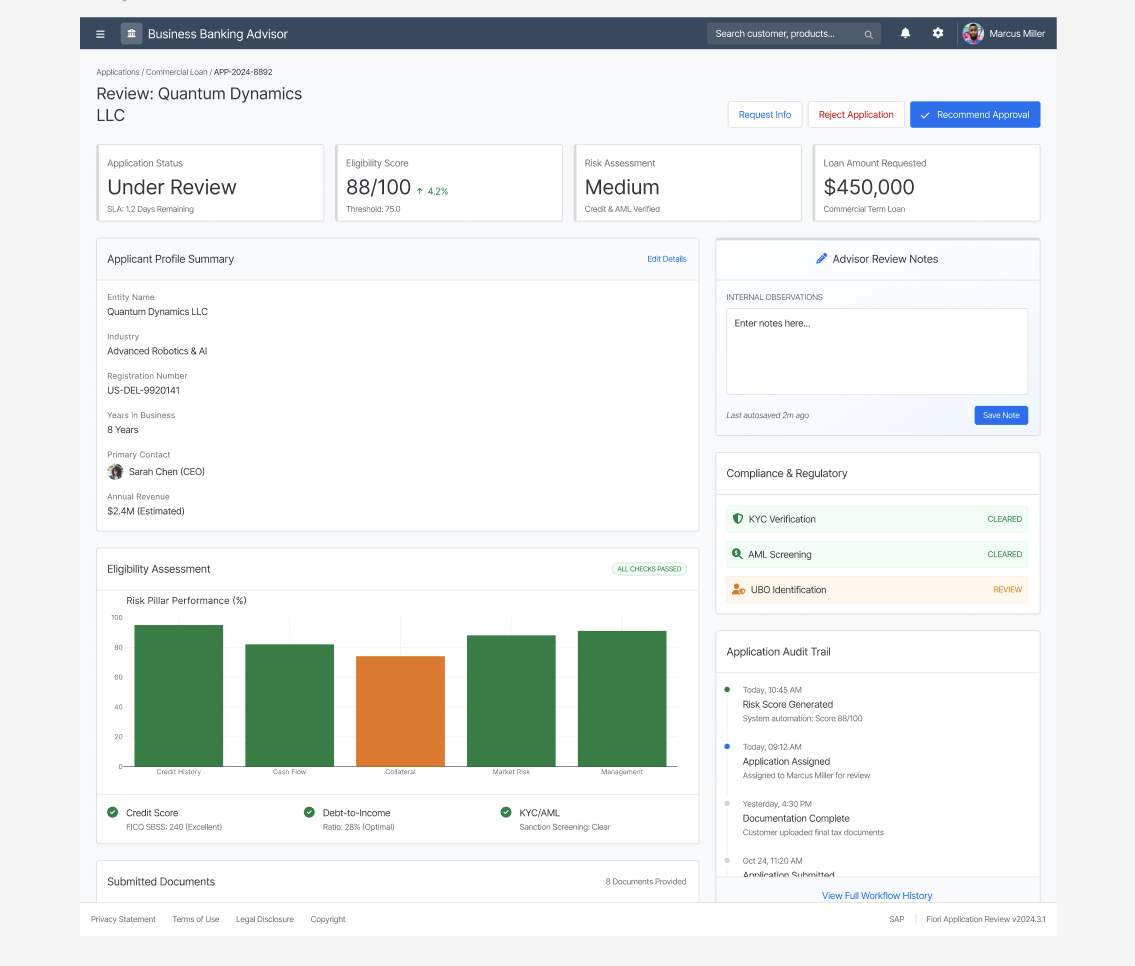
- Decision-support summaries: help advisors quickly understand eligibility, risk, and next steps.
- Standardized terminology: reduce confusion across product streams.
- Accessible form patterns: support keyboard navigation, error clarity, and readable labels.
- Status visibility: make workflow stage and pending actions easier to understand.
The platform proactively surfaces recommendations instead of requiring advisors to search for opportunities
ResultImproved discoverability of growth opportunities.
The platform follows enterprise accessibility standards by:
- Maintaining WCAG-compliant contrast ratios
- Providing semantic status indicators
- Providing semantic status indicators
- Supporting keyboard navigation
- Using clear typography hierarchy
- Designing responsive layouts
Outcome
- SQL-based reporting workflows built for the banking domain increased monthly and year-end P&L report generation efficiency by 60% and accuracy by 50%, reducing manual effort for financial analysts.
- Translated complex business and regulatory requirements into intuitive advisor experiences, reducing workflow complexity and improving task efficiency by 20% across key advisor journeys.
- Delivered and maintained solutions across 10+ enterprise applications, supporting both internal banking advisors and customer-facing experiences — from discovery through usability testing and handoff.
Built with: AngularJS · Tailwind CSS · D3.js · Vue.js · GraphQL · MySQL · Figma
Reflection
This project explored how enterprise UX can simplify highly regulated decision-making workflows. By combining customer intelligence, lending assessments, compliance guidance, and advisor recommendations into a single platform, the experience helps advisors focus less on gathering information and more on delivering value to customers.