Overview
Story CreatAR is a research-driven authoring platform that enables creators to design location-aware augmented reality experiences without requiring extensive technical knowledge.
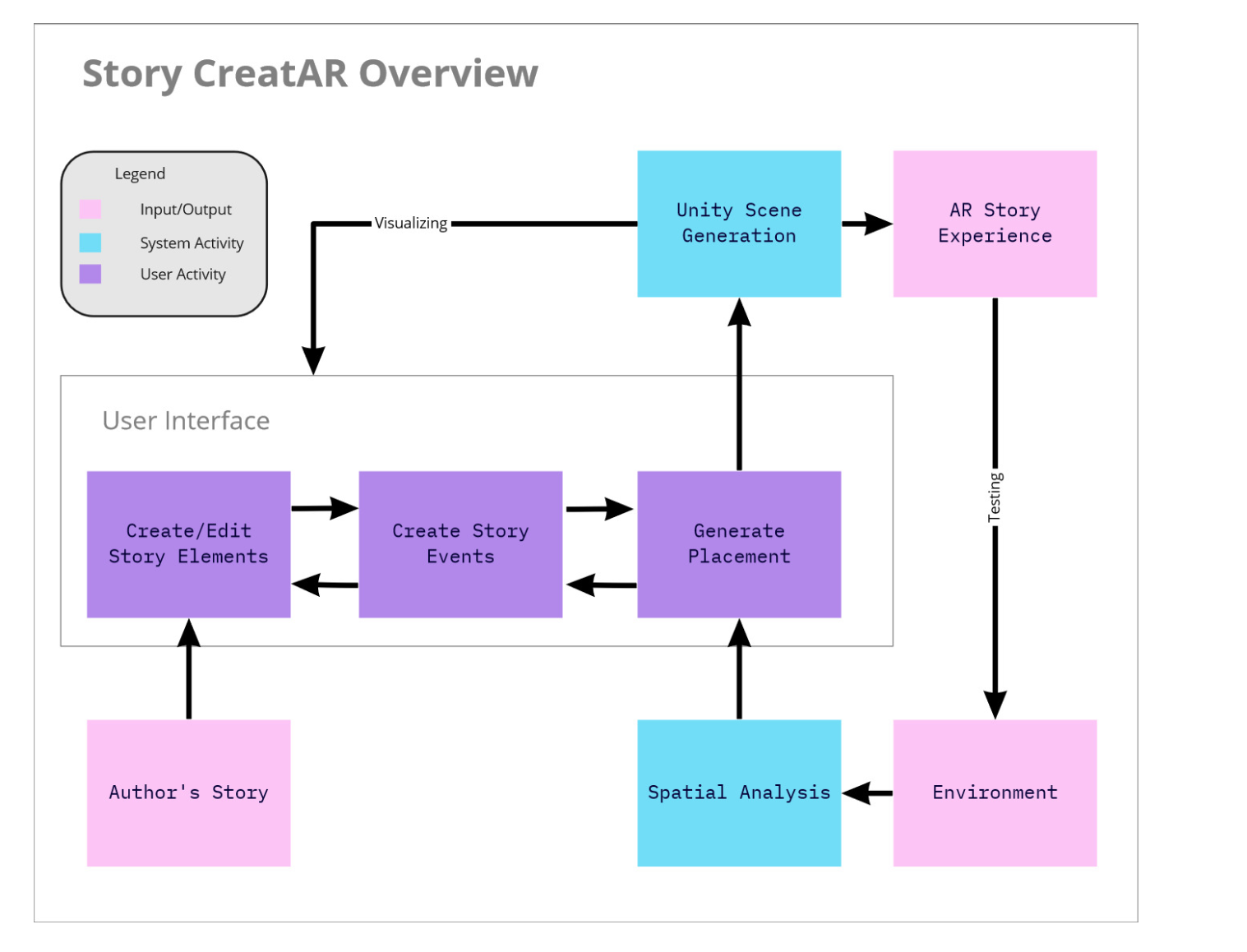
The project explored how user-centered design, visual interfaces, and guided workflows can simplify the process of creating immersive AR stories while leveraging spatial analysis behind the scenes.
The work was published at IEEE VR 2021.
Problem
The challenge was to design a system that reduces technical complexity while still allowing users to create rich, context-aware AR experiences.
Goal
The goal was to explore how AR storytelling could become more approachable by supporting story creation through guided interaction, machine learning assistance, and native QR-based tracking.
Research Approach
Through research and prototype evaluation, several usability challenges emerged.
Complex Authoring Workflows
Lack of Visual Feedback
High Cognitive Load
Technical Barriers
Users needed to make multiple interconnected decisions regarding story structure and spatial placement.
Existing workflows provided limited visibility into how story elements would behave within real-world environments.
Authors needed to manage narrative content and environmental considerations simultaneously.
Many tools assumed prior knowledge of AR systems and development concepts. These insights guided the design of a more structured and user-friendly authoring experience.
My Contribution
I contributed to the design and research of a tool that supported story creation in augmented reality. My work connected technical implementation with interaction design and user-centered research thinking.
Key Design Decisions: UX Principles Applied
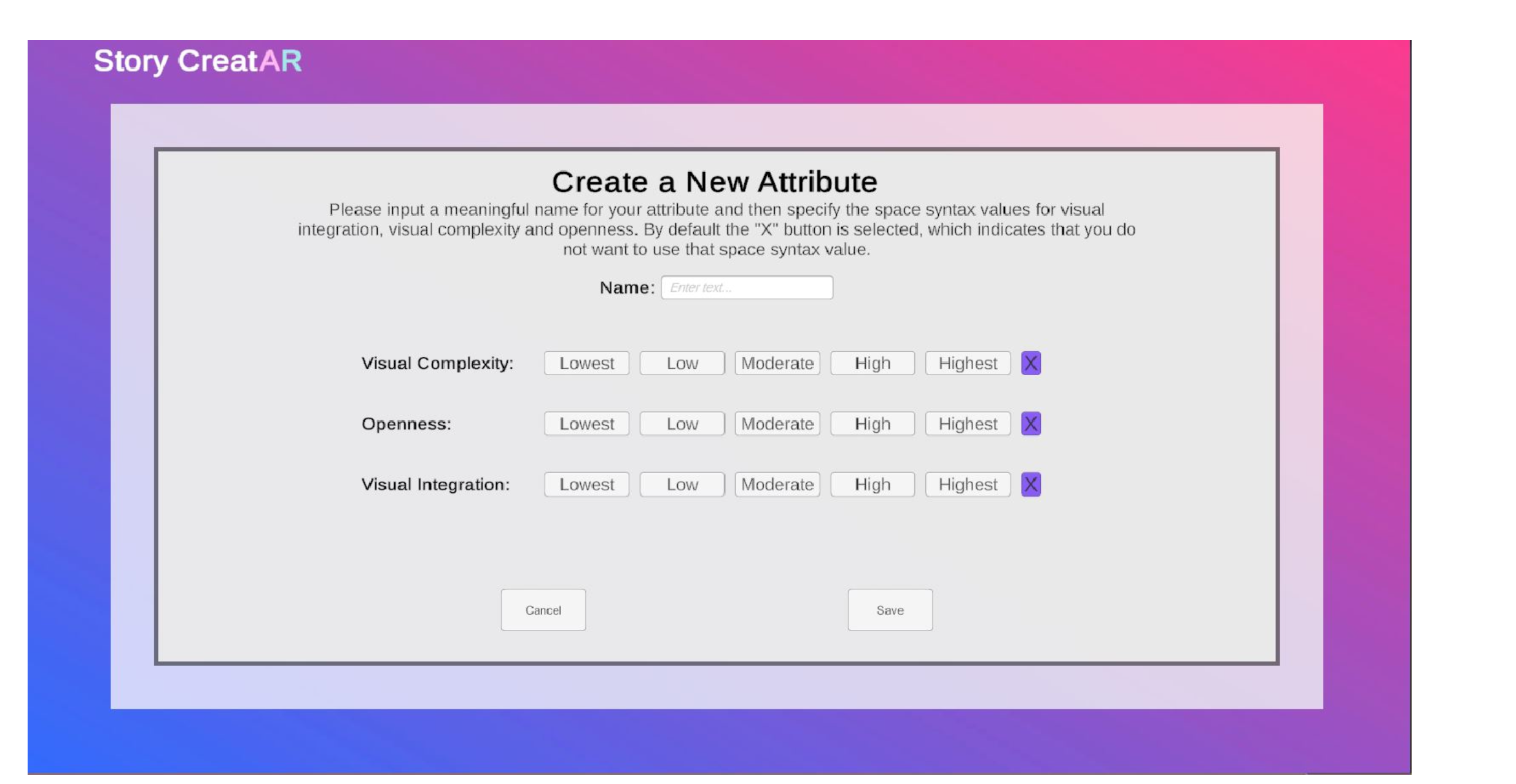
- Recognition Over Recall: Users choose from predefined values rather than memorizing system terminology.
- Error Prevention: Constrained inputs reduce configuration mistakes.
- Consistency: All spatial properties follow the same interaction pattern, improving usability.
Frontend & Interaction Design Considerations
- Clear form layouts
- Consistent interaction patterns
- Visual grouping of related information
- Large click targets for usability
- Logical workflow progression
- Minimalist UI to reduce distraction
Outcome
Story CreatAR was successfully published at IEEE VR 2021 and demonstrated how UX design and frontend development can make emerging technologies more accessible.
Reflection
This project helped me understand how design decisions change when users interact in physical space rather than on a flat screen. It strengthened my ability to think about usability, technical constraints, and research impact together.